The W2LXO Story
by Cory Adelt, N1XWS
Stanley Emil Jacke was born on a cold February day in 1925 in New Brunswick, New Jersey, but itdidn’t take long before his world began to hum with invisible signals and quiet currents. By the time his family settled in West Orange, something in him had already locked onto a frequency most people never hear—the pull of electronics, the mystery of how voices and images could travel through air.
As a boy, Stan wasn’t content to simply use things. He needed to understand them, to take them apart and, more importantly, to put them back together in ways they were never intended. Wires, tubes, resistors—these weren’t just components; they were pieces of a language he was learning to speak fluently before most kids his age understood its alphabet.
His younger sister Barbara would later tell a story that perfectly captured who Stan was becoming. One afternoon around 1940, she came home expecting the usual quiet of the house. Instead, she found the living room packed wall-to-wall with neighbors. Adults stood shoulder to shoulder, children craned their necks, and every eye in the room was fixed on a strange glowing box at the far end.
Stan had built a television.
At a time when TVs were barely available—and certainly not something a teenager casually assembled—he had somehow gathered the parts, understood the circuitry, and brought it to life. Word spread quickly. What he had created wasn’t just a device; it was a spectacle. For that brief moment, the Jacke living room became a window into the future, and Stan was the one who opened it.
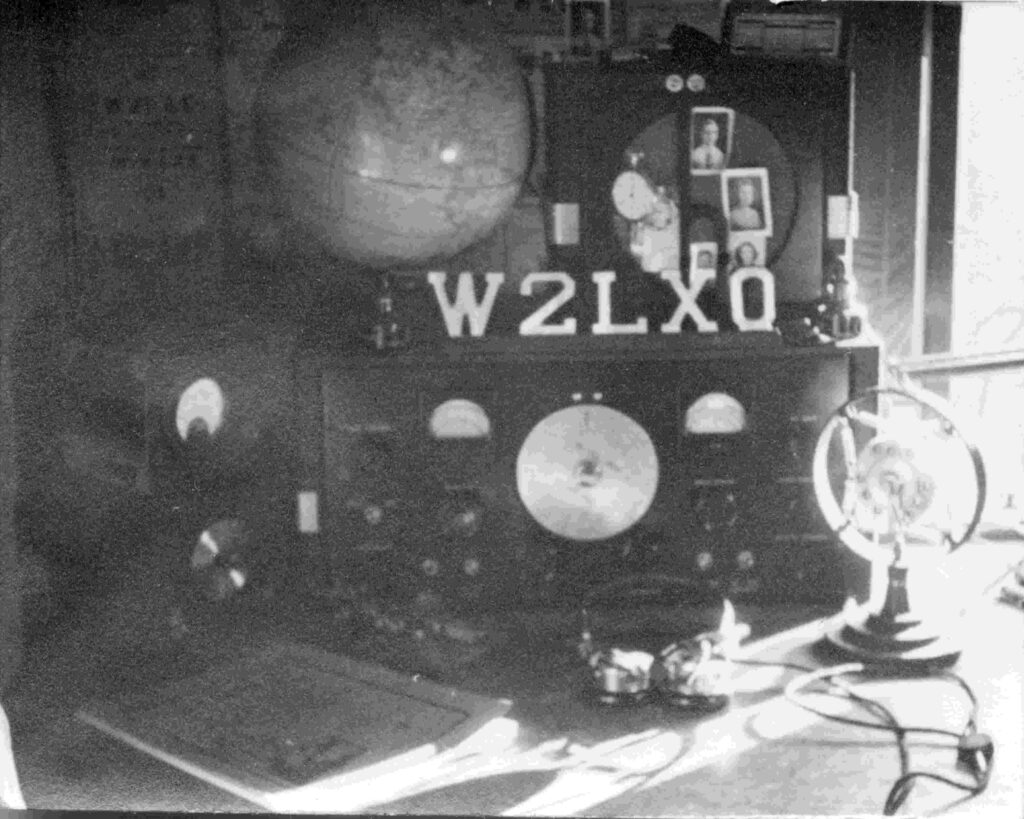
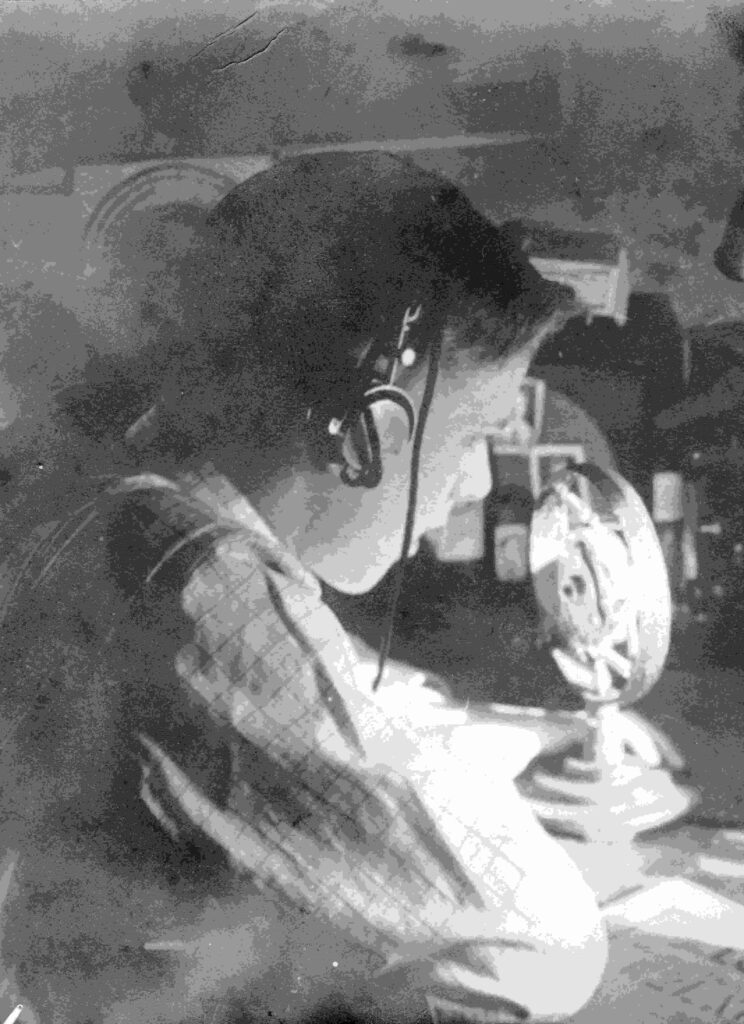
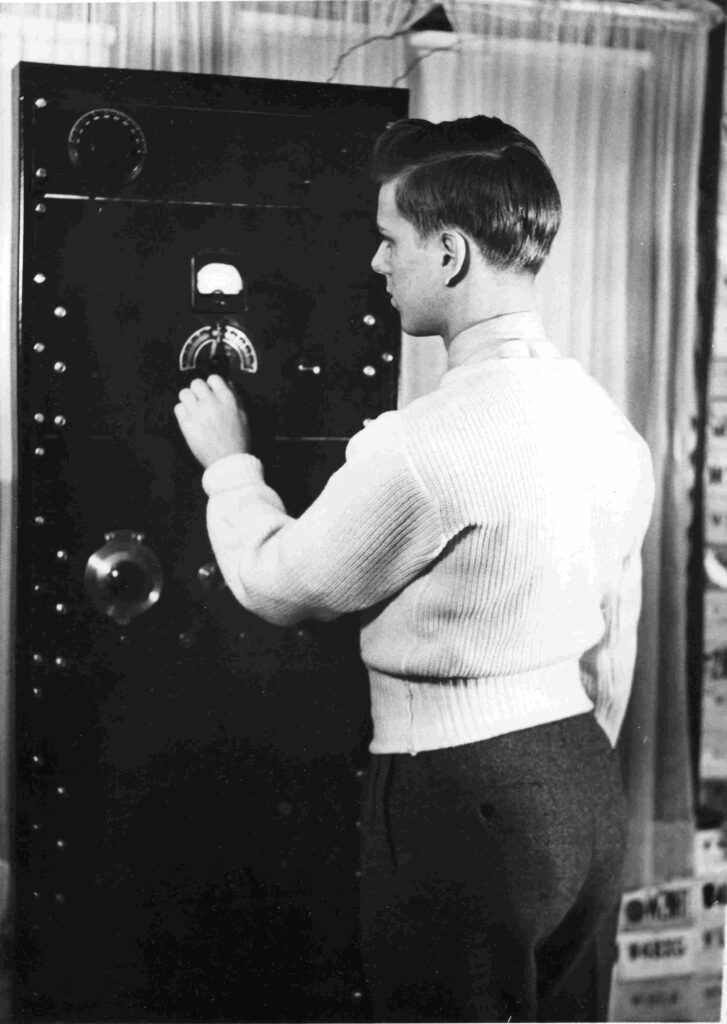
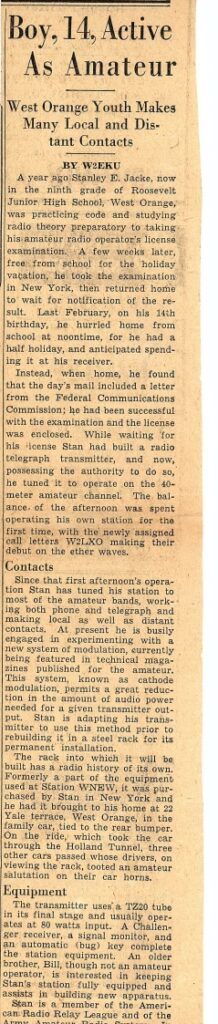
That same curiosity drove him into amateur radio. By his early teens, he had built his own rig and earned his FCC license on his 14th birthday—his call sign, W2LXO, becoming his identity on the airwaves. At just 14, he was already part of a global conversation, speaking in signals that bounced off the ionosphere and returned from places he had never seen.
His parents’ home on Yale Terrace bore the marks of his passion. Antennas climbed its sides, stretching upward like metallic trees. And that was just the beginning. Wherever Stan went in life, antennas followed. Trees became towers. Towers became taller towers. If there was a way to reach farther, he would find it.
In 1942, still just a teenager, Stan and a group of fellow ham operators made a trip that perfectly captured the spirit of early amateur radio. They drove from New Jersey to the summit of Mount Greylock in Massachusetts, hauling equipment, setting up camp, and turning the mountain into a temporary relay station—likely for an ARRL relay competition. At some point, a police officer approached, curious about the cluster of young men and their strange gear. Whatever concerns he had were quickly put to rest. The encounter ended not with suspicion, but with a photograph—Stan standing beside the officer, both part of a moment where curiosity met understanding.
Then came the war.
In June 1943, just one week before graduating high school, Stan enlisted in the U.S. Coast Guard. His skills made him invaluable from the start. He was immediately advanced to Radio Technician Third Class, a recognition not of age, but of expertise. Aboard the USS Lowe, a destroyer escort, he was responsible for the ship’s electronics—no small task in the high-stakes environment of the Mediterranean and African theaters.
Signals in wartime were lifelines. Communication, detection, coordination—everything depended on systems working flawlessly. Stan wasn’t just participating; he was ensuring those invisible threads held.
In 1944, he was sent to Groton, Connecticut for advanced training. There, he didn’t just excel—he graduated as valedictorian. Soon after, he became an instructor himself, teaching both basic and advanced radio receiver theory. The student had become the teacher, passing along the knowledge that had once captivated him as a boy hunched over wires and tubes.
By the time he was discharged in 1946 as an Electronic Technician’s Mate First Class, Stan had already lived several lifetimes’ worth of experience.
Peace brought new opportunities. He attended Drew University, then transferred to Purdue, where he studied electrical engineering—and, notably, taught it as well. From there, his career moved into industry: Delco Remy, working on ignition systems; Detrex Corporation, where he shifted into ultrasonics; and eventually, his own company, started humbly in a basement.
That company would grow, be acquired by Branson Ultrasonics, and carry Stan into executive leadership. Over time, he transitioned from hands-on electronics into management, eventually becoming president of Branson. When the company was acquired by GlaxoSmithKline, he rose to Executive Vice President, closing out a career that had traveled from solder joints to boardrooms.
But through it all—through war, education, industry, and leadership—amateur radio never left him.
It was there in every antenna he built, every tower he raised, every location he chose. When his family settled in Ridgefield, Connecticut, the site was selected for its elevation. For Stan, height meant reach. And even that wasn’t enough—he built a 70-foot tower in the backyard, a steel spine reaching skyward.
For his children, it wasn’t just a structure; it was a world. They climbed it like a jungle gym, built forts atop it, even slept there under open skies. From that height, they could see for miles—on clear days, all the way to Long Island. Looking back, it seemed impossibly dangerous. At the time, it was simply life inside Stan’s orbit—where curiosity outweighed fear and the sky was never the limit.
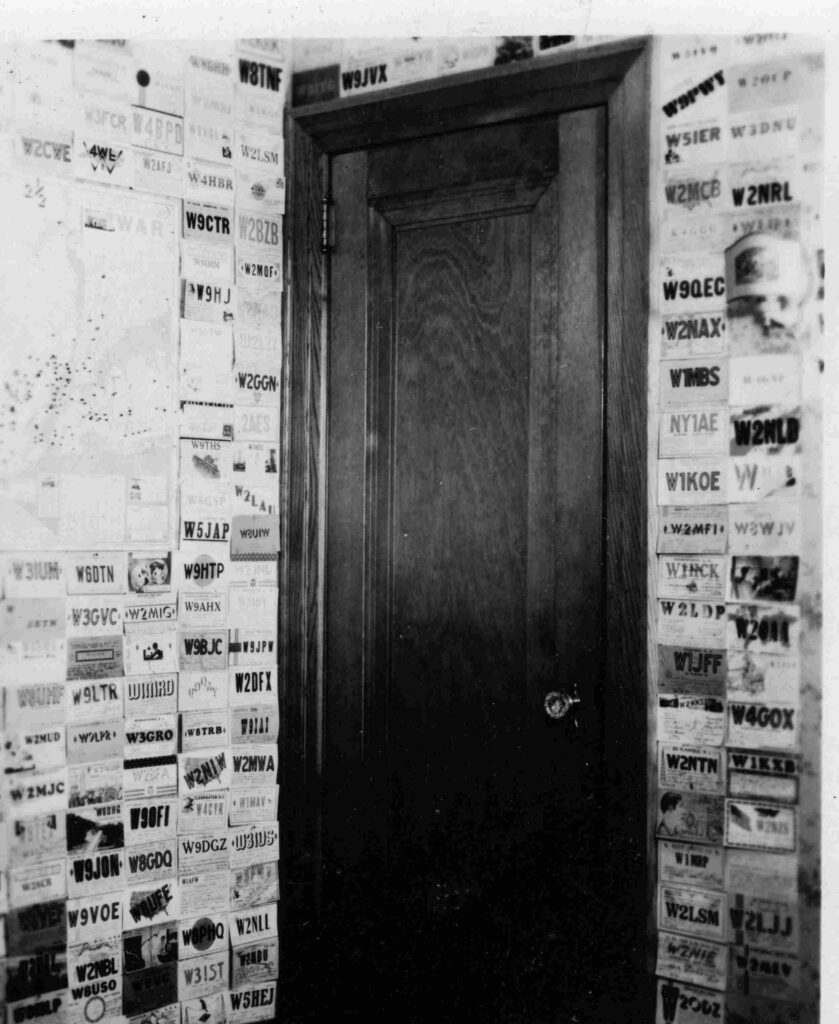
Stan’s love of amateur radio wasn’t just a hobby. It was the foundation of everything that followed. It shaped his skills, defined his opportunities, and carried him across decades of technological change. It connected him to people, to ideas, to a wider world long before the internet made such things commonplace.
In the end, what began as a boy’s fascination with wires and signals became a lifelong dialogue with the unseen forces that connect us all. And through that dialogue, Stanley Emil Jacke didn’t just listen—he transmitted something lasting.